-
Categories
| Body type | Other |
| Gearbox | Manual Transmission |
| Engine capacity | 1984 cm³ |
| First registration | 1978 |
The Porsche 924 was produced from 1976 to 1988 and served as the successor to the 914 model. The idea for the 914’s successor was first proposed in 1972, though it took four more years for the actual development to take shape, coinciding with the escalation of the oil crisis. The 924 was the first Porsche that had a front-mounted engine, which was somewhat contradictory to Porsche’s trademark. However, this did not hinder the 924’s period of successful sales and production. Consequently, the 924 has now evolved into a highly coveted classic car.
Initially, Porsche intended to produce the 911 only temporarily. However, the sales of the 911 exploded, leading to further production. This presented Porsche with a ‘luxury problem’ as they feared an abrupt drop in sales if they relied solely on only one car. Therefore, an entry-level model was deemed necessary, and it was previously sold as the '912', then as the '914', and in 1976 the 924 came to market. The design team at Porsche was asked to create an entry-level Porsche that could accommodate four people comfortably while still embodying the sporty Porsche charisma. In 1976, they succeeded with the introduction of the 924. It was a sporty Porsche coupe that fulfilled its promise of seating four individuals, but it was atypical for Porsche because it housed a four-cylinder engine from the Audi 100 in the front. This led to some initial criticism of people stating that it was not a ‘real Porsche’. Nevertheless, times have changed, and the 924 models have garnered true admiration over the years. This is shown in the appreciating value of these models, which, like the iconic 911, make for a sound investment.
Another unique feature of the Porsche 924 was its pop-up headlights, which significantly improved the car's aerodynamics, and its nearly balanced weight distribution, achieved through the combination of a front-mounted engine with a rear-mounted transmission. Both these aspects contributed to its popularity, and by 1988, approximately 120,000 924’s had been sold, following several different variants and minor facelifts.
Porsche 924 Turbo
The 924 met just nearly all criteria of buyers in the seventies, but some among them felt that its atmospheric engine lacked the distinctive Porsche character. Fortunately, Porsche engineers are as quick as the cars they design, so they responded pragmatically by optionally equipping the 924 with a turbocharger from 1978.
To equip the 924 with a turbocharger, some adjustments were to be made to the 924’s straight-four engine. Certain components had to be replaced with modified performance ones, and visually, even the hood underwent a change: NACA ducts were mounted at the front of the hood. These served not only to visually differentiate a 924 Turbo from a ‘regular’ 924, but also allowed warm air to escape when stationary.
The 924 Turbo turned out to be a success. Its performance was praised from the moment it was released, with performance approaching supercar-performance level. In 1981, a second, more powerful and revised version of the 924 Turbo was introduced.
About 13,000 of the Porsche 924 Turbo were manufactured. It was unanimously praised at its release, and that praise has even strengthened over the decades.
Technical information:
Body work
Mechanics
Please do not hesitate to contact us via email to receive the detailed expertise report
103.833,00 $
103.717,63 $
103.716,48 $
103.602,26 $
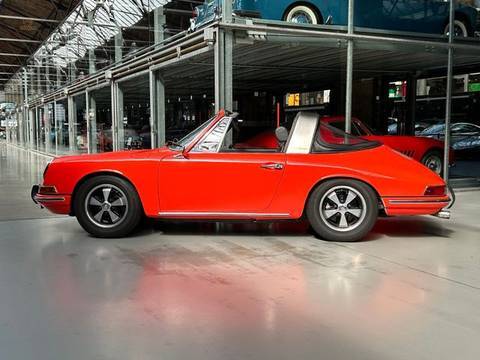
103.256,15 $
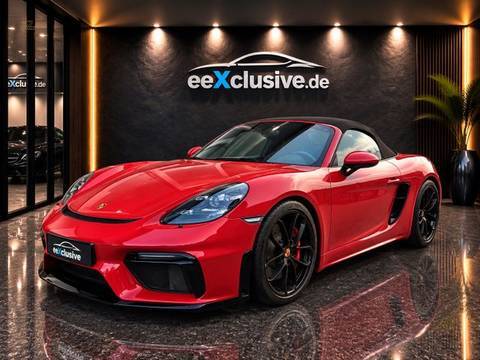
104.965,93 $

102.563,93 $
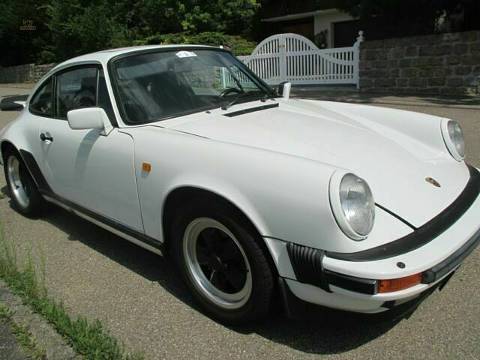
105.102,07 $
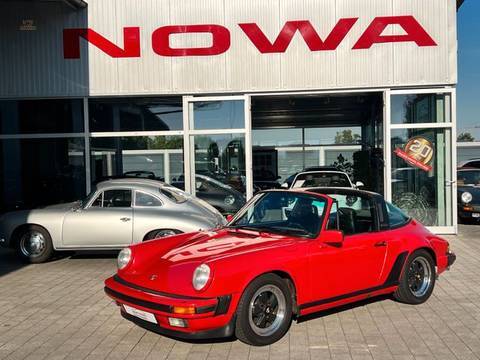
102.102,45 $
106.012,34 $
101.525,60 $
101.484,07 $
106.371,14 $
106.601,88 $
106.601,88 $
100.948,75 $

100.361,52 $
100.256,53 $
107.870,95 $
108.217,06 $
 New
New
14.940,41 $
 New
New
37.495,25 $
 New
New
17.247,82 $
 New
New
80.701,32 $
 New
New
33.399,62 $
 New
New
51.916,50 $
 New
New
21.862,61 $
 New
New
32.245,91 $
 New
New
27.631,11 $
 New
New
328.804,50 $
 New
New
19.555,22 $
 New
New
201.897,50 $
 New
New
92.296,00 $
 New
New
27.111,95 $
 New
New
31.726,75 $
 New
New
230.682,32 $
 New
New
115.312,31 $
 New
New
39.168,12 $
 New
New
92.238,32 $
28.784,82 $
 New
New
11.479,31 $
 New
New
14.940,41 $
 New
New
8.652,75 $
10.094,88 $
13.786,72 $
21.055,02 $
57.627,31 $
7.210,63 $
78.393,92 $
13.267,55 $
8.018,21 $
40.379,50 $
9.171,91 $
32.245,91 $
69.222,00 $
9.806,45 $
14.940,41 $